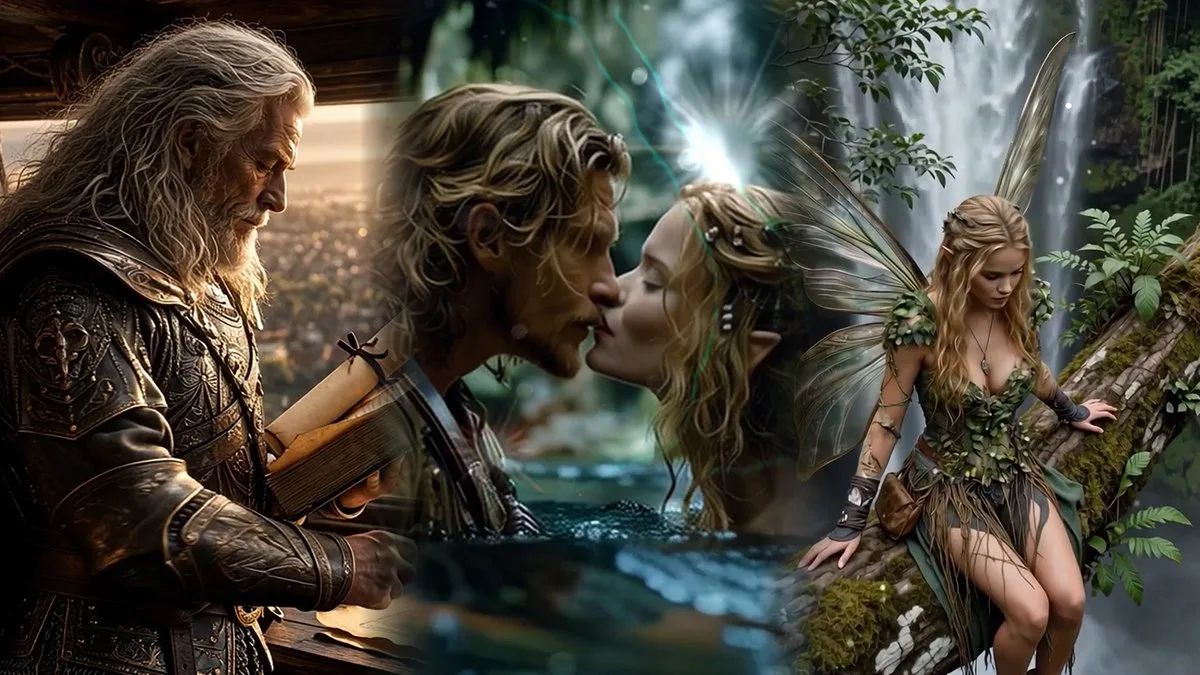
After a long career in technology, the military, and a variety of serious pursuits, I have to admit that I sometimes get an odd look when I talk about Airovale, a time-travel fantasy romance with steampunk aesthetics.
And I get it. Talking about fantasy worlds, romance, and cinematic videos can seem a little out of character when most conversations have revolved around cybersecurity, technology, and the business world. But I’ve watched too many colleagues define themselves by a career that became their identity.
I’m not retired yet, but I have begun to wonder: Who are you the day after retirement?
For me, the answer has always involved learning new things. Over the years, I’ve pursued plenty of interests that had nothing to do with my profession. Not everything needs to make money or become a job. Sometimes, a little intrigue is reason enough to begin.
Airovale, however, became something I never expected.
It didn’t start with a book
It was early 2025, and AI image generation and video creation were beginning to enter the mainstream. I had spent decades working with graphic design, presentations, and visual communication, pushing pixels around to develop ideas and bring them to life.
The thought of creating an image simply by describing it, rather than relying on photography, traditional artwork, or hours of manual composition, sounded almost like magic.
Of course, the early results were dreadful. We all remember the six-fingered characters, strange eyes, and bizarre proportions. But the technology was improving, and I’d seen enough impressive examples on Instagram and YouTube to want to try it myself.
I’d heard about Midjourney and knew it required Discord to access. Having encountered Discord through the cryptocurrency world, I was already familiar with the platform, so I jumped in and started experimenting.
My early work was awful. There was so much to learn, and the results could be discouraging. It reminded me of learning a musical instrument: the gap between what you imagine and what you can actually produce can be enormous.
Still, I kept going.
I settled on a steampunk aesthetic. It seemed like a natural fit for someone interested in technology and visual design: machines creating images of machines, mixed with the romance of an imagined past. I had no idea how much controversy AI-generated art would eventually attract, even within creative communities.
But that was a debate for another day. I was there to learn something new.
From images to moving pictures
My initial ideas revolved around zeppelins, medieval-style villages, and scenes that felt as though they belonged in an epic fantasy. I spent entire weekends learning how to write prompts, experimenting with different approaches, and discovering just how unforgiving these systems could be. Once an image was generated, recreating it exactly was often impossible.
After about a month, I had accumulated a collection of scenes. Then I discovered that I could turn still images into video.
That changed everything.
With my background in video editing, I could see the possibilities immediately. I could describe a scene, suggest camera movements, direct the lighting, and influence the depth of field. For the first time, I could begin to create the feeling of a movie without the traditional production process.
That doesn’t mean the results were particularly good. They often looked unmistakably computer-generated. But I could see where the technology might lead, and that was enough to keep me interested.
Another month passed. More experiments, new techniques, new tools. Eventually, I had assembled a series of scenes depicting an imagined day in the life of a steampunk village.
It wasn’t the most sophisticated work out there, but it was mine. I’d set out to learn something new, and I’d accomplished exactly that.
Mission accomplished.
Except I kept going.
The story I hadn’t intended to write
The characters in those scenes had begun to take on lives of their own. Even when I gave them the simplest instructions, I found myself imagining what they were doing, what they wanted, and what might happen next.
I made a second video, then a third. And somewhere around the fourth month, I realized something unexpected.
I wasn’t just making videos. I was writing a story, using video instead of words. The prompts were becoming my first draft.
It wasn’t how most people would approach writing a book, but there it was: a story waiting to be told.
I began formalizing the plot, developing the characters, and building a world around the scenes I’d created. Magic, time travel, romance, mysterious islands, and the lives of people who move from place to place all found their way into the story. Some of those themes reflected my own experiences growing up in a military family, where movement and change were simply part of life.
And then there was time.
Time became the central idea running through Airovale. We all move through it, making decisions whose consequences we may not fully understand until much later. Some choices bring opportunities; others leave us with regrets we can never quite resolve.
What if we could go back and change them?
And what would it cost us?
That question became part of the world itself, where time is a treasure that can be exchanged, but never without a price. The videos had inspired the story, and the story had given those original images and characters a much larger purpose.
Airovale had become something far beyond the creative experiment I’d started just a few months earlier.
Eighteen months later
Today, I’m working on the second and third books of Airovale, returning to video production whenever I need a break from writing. The tools have improved dramatically, giving me far greater control over what I can create rather than leaving everything to the randomness of a generative system.
Perhaps one day I’ll be able to direct these characters through an entire feature-length film, with consistent performances and dialogue, rather than the cinematic shorts currently available on the site.
For now, I’m happy to keep learning and see where the technology takes me.