

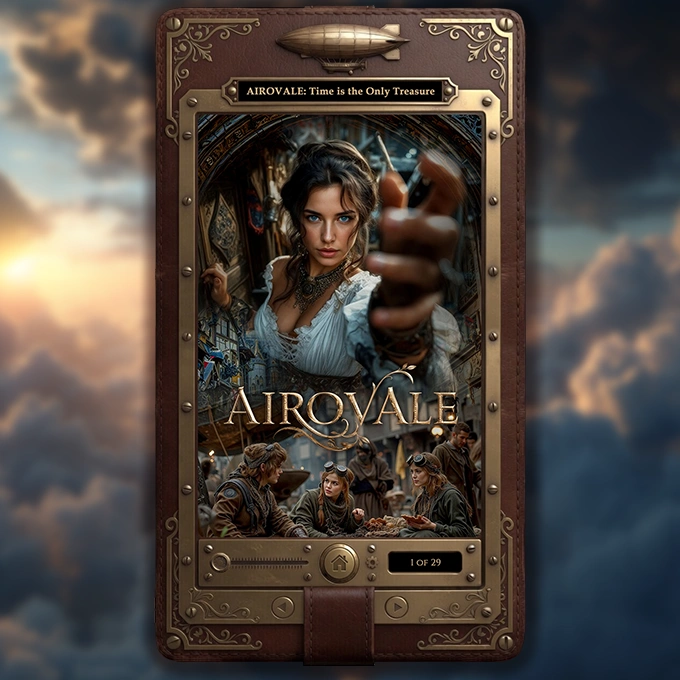
eBook
Read in the Chrono-Viewer
Flip through all 29 pages inside our brass-fitted steampunk reader — then take it with you.
$0.99
183 pp · ISBN 979-8902432326
★★★★★
Coming Home is an episode built on the weight of what absence does to a place. Airovale receives its survivors not with fanfare but with the particular silence of people counting faces and finding the numbers wrong. Those who returned carry the storm in their posture—you can see it in how they walk, how they avoid certain streets, how they don't mention certain names.
Kael finds Mira at the harbor, and the reunion is everything that word implies—relief and grief in equal measure, the joy of return shadowed by the knowledge of what it cost. The city holds both things at once: homecoming celebration and quiet mourning, families made whole and families that never will be.
This episode understands that the end of an ordeal is rarely clean. The storm was one event; coming home is a hundred smaller ones, each demanding its own accounting. What Airovale asks of its survivors is not just survival, but the harder work of learning to live again in a world that now has holes in it.
This collage captures a village suspended between hope and heartbreak as it awaits the return of the fleet. Every eye is fixed on the horizon, searching for the silhouettes of airships emerging against the rising sun. Bells ring with the first joy of their arrival, only to give way to the quiet sting of learning who will never return. Every embrace becomes a priceless gift, leaving one unspoken question: Why must provision be paid in absence?

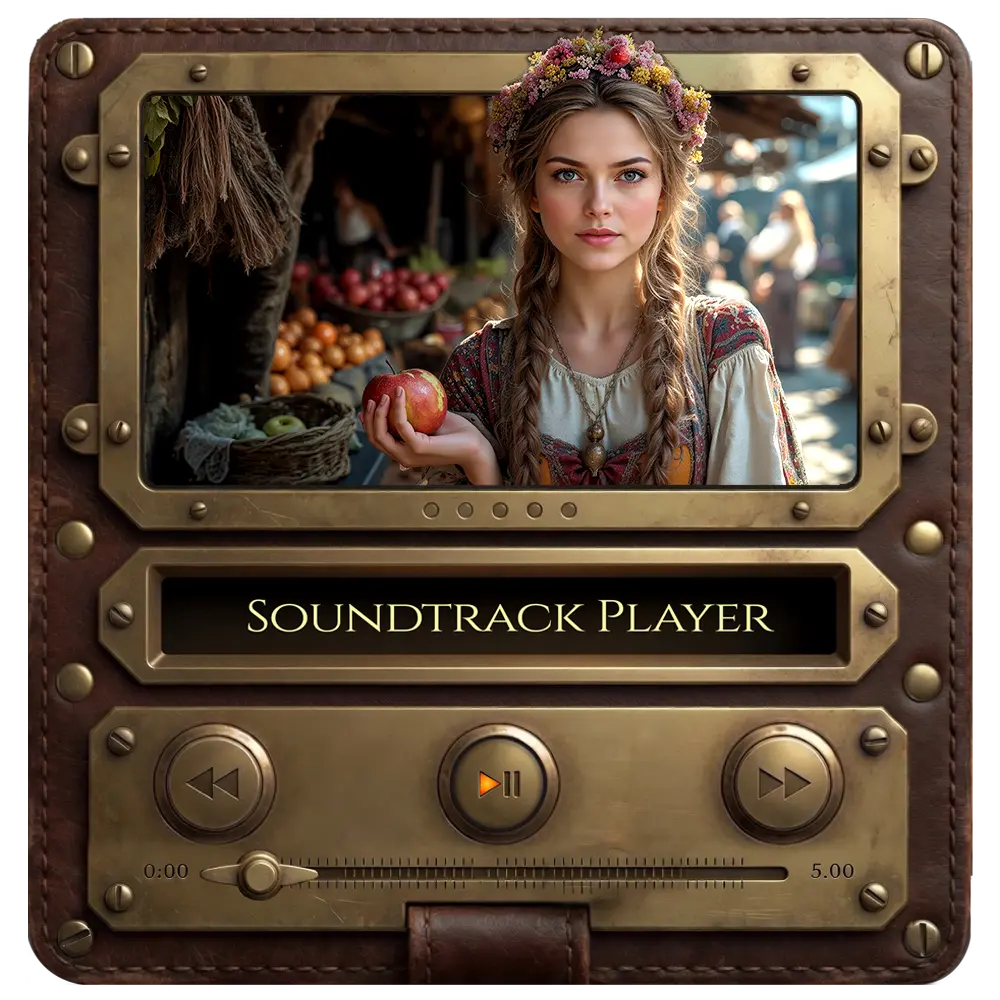
"Come Back to Me" by Jef Gray — an emotional composition inspired by the return of survivors from the great storm. After a successful mining expedition, the fleet of Airovale zeppelins and balloons is devastated at sea, forcing the survivors to cast their hard-earned cargo into the ocean to save those struggling in the waves. They return home with empty hands and fewer souls aboard. *Come Back to Me* echoes the words of a young woman who watched her future husband depart in search of riches that promised to secure their future together. Now she waits for his return, knowing he is long overdue, questioning why he had to pursue distant wealth when their true treasure was already at home. She stands in the field where she last saw him ascend into the sky, whispering the same words like a prayer into the pale horizon.
Listen to "Come Back to Me" from the Airovale soundtrack →
Time is the only treasure
Flip through all 29 pages inside our brass-fitted steampunk reader — then take it with you.
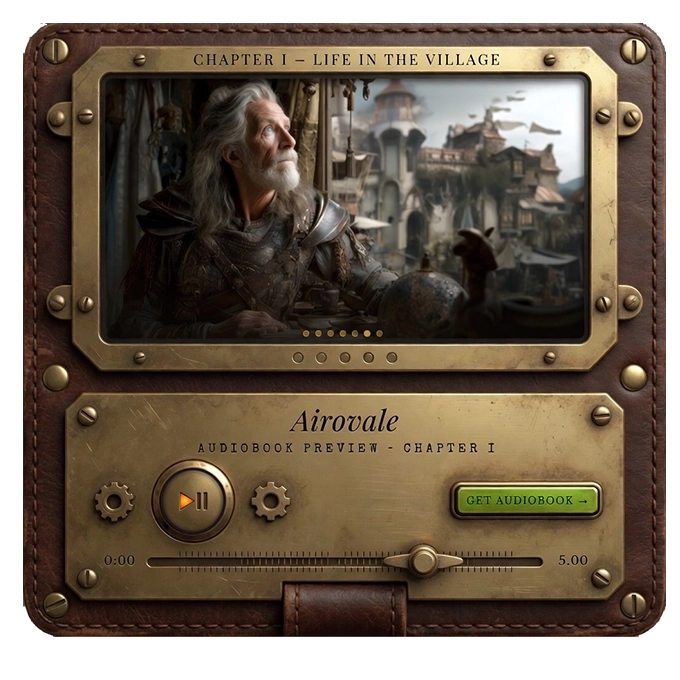
Stream a full chapter preview right here — then unlock all ten chapters for less than a cup of coffee.
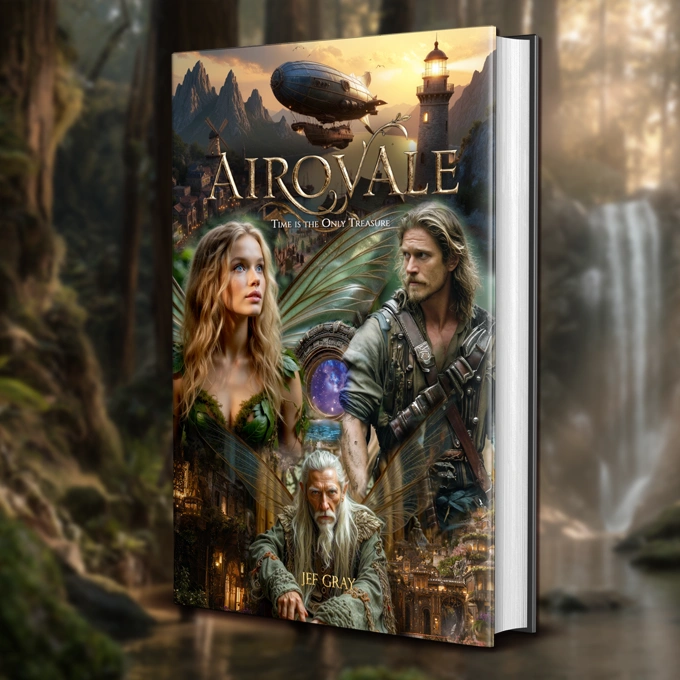
169 pages of steampunk fantasy — a signed-quality paperback to keep on the shelf or gift to a reader.
Yes — the story content is identical across all three formats. The only difference is the chapter illustrations, which appear in the ebook and paperback but not the audiobook.
Absolutely. The video episodes present a glimpse of the scenery set to the soundtrack's emotional journey, while the book is where the characters' thoughts and dialogue come through — the full interior experience of the story.
Airovale is appropriate for teens ages 16+. The content touches on mature themes including dueling, the penalty of death, greed, immortality, and coming-of-age young adult romance.
The romance in Airovale is written at a young adult level, with no graphic content beyond a few kisses. It centers on the two main characters as their journey to a forbidden ruin reveals ancient secrets about the island they inhabit, and their relationship grows into love and a decision to be together.
No warning needed. Airovale is a romantic adventure story, safe for readers ages 16 and up, with no graphic moments beyond a kiss.
Airovale is a series. The first book introduces the story, and additional books — two or more to complete the arc — are currently in development.
Not exactly. Steampunk fantasy with time travel exists, and fantasy with fae exists, but few stories combine both. The closest comparisons are Carnival Row (Amazon Prime Video) or The Anubis Gates (Tim Powers) — though Airovale is a wholly original fantasy world with no historical setting.
Primarily, Airovale is a story told through three lenses: book, video, and music. The website and companion channel (Roku TV) present short cinematic episodes alongside a complete original soundtrack, while the book is the deepest way to experience the full story — the center of the Airovale experience.